

A Practical Guide to Digital Manufacturing: From Concept to Production
Blog Article | April 29, 2026

Author: Sassan Khoubyari
Director, PLM & Digital Transformation
- Over 20 years of technical implementation, strategy development and management experience in PLM, IT for global product development operations(Auto and Aerospace)
- Expertise in PLM, IT technology evaluation, selection, configuration and implementation with structured project management practices
- Proven track record of process improvement implementation, executive reviews and overall system support
- Managed technical staff and vendors in successful multi million dollars technology and process implementation
Summary & Key Topics
Digital manufacturing uses integrated technologies like AI, IoT, CAD/CAM, and automation to connect and optimize the entire production process. It enables faster, more efficient, and flexible manufacturing while improving quality and decision-making through real-time data. However, it also introduces challenges such as high implementation costs, cybersecurity risks, and the need for a skilled workforce.
Key Topics Covered:
-
What Is Digital Manufacturing
-
Key Technologies in Digital Manufacturing
-
Advantages of Digital Manufacturing
-
Disadvantages and Challenges
-
Digital vs Traditional Manufacturing
-
Role of Data in Digital Manufacturing
-
Digital Manufacturing and Industry 4.0
-
Applications and Use Cases Future Trends in Digital
-
Manufacturing Business Impact and ROI
The Shift Toward Digital Manufacturing
Manufacturing is undergoing a fundamental transformation. Traditional, sequential production models are being replaced by interconnected, data-driven systems that allow teams to design, simulate, and optimize products before physical production begins.
This shift—commonly referred to as digital manufacturing—is not just about automation. It represents a broader integration of engineering tools, production systems, and enterprise data into a cohesive digital thread.
For engineering teams, operations leaders, and manufacturers, understanding digital manufacturing is critical. It directly impacts product development speed, production efficiency, and the ability to respond to market changes.
What is Digital Manufacturing?
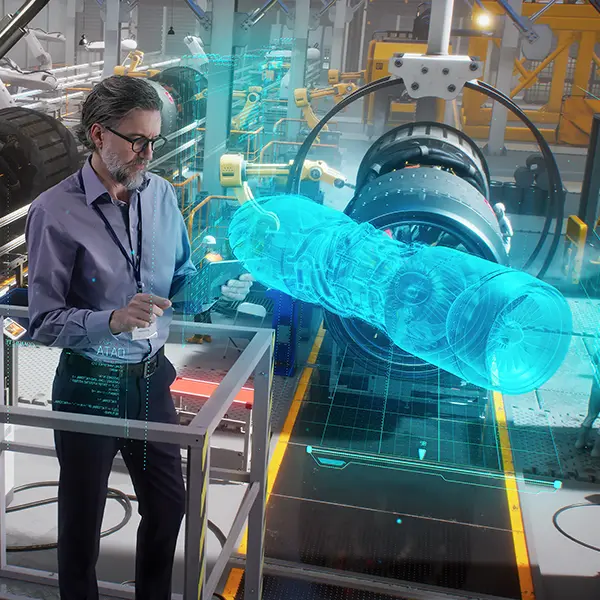
Digital manufacturing is the use of integrated digital technologies and data-driven systems to improve manufacturing processes across the entire product lifecycle.
At its core, it connects design, engineering, production, and operations through digital tools and real-time data.
Key Characteristics
- Use of software and automation to optimize production
- Integration of engineering and manufacturing workflows
- Real-time data collection and analysis
- Support for customization and flexible production
Core Technologies
Digital Manufacturing Brings Together a Wide Range of Systems:
- CAD, CAM, and CAE for design, toolpath generation, and simulation
- CNC machines for automated machining
- AI and machine learning for optimization and prediction
- Industrial IoT (IIoT) for machine connectivity
- Robotics and automation for repetitive or hazardous tasks
- Additive manufacturing (3D printing) for rapid prototyping and production
Key Components
A Complete Digital Manufacturing Ecosystem Often Includes:
Product Lifecycle Management (PLM)
Manages product data from concept through end-of-life
CAD / CAM / CAE
Supports design, simulation, and manufacturing planning
Manufacturing Execution Systems (MES)
Tracks and controls work-in-progress on the shop floor
Enterprise Resource Planning (ERP)
Integrates operations like planning, procurement, and finance
Industrial IoT (IIoT)
Connects machines and sensors for real-time data exchange
Cloud Computing
Enables scalable data storage and remote access
Big Data Analytics
Extracts insights from large datasets
AI & Machine Learning
Drives predictive maintenance and process optimization
Robotics & Automation
Executes physical tasks with precision
Additive Manufacturing
Builds parts layer-by-layer from digital models
AR/VR
Supports training, maintenance, and visualization
Digital Twin
A virtual representation of a physical system for simulation and monitoring
Why Is Digital Manufacturing Important?
Digital manufacturing enables organizations to move from reactive to proactive operations.
Instead of Relying on Historical Data and Manual Processes, Teams Can:
- Monitor systems in real time
- Simulate outcomes before production
- Identify inefficiencies early
- Adapt quickly to design or demand changes
This capability is especially important in industries with tight tolerances, complex assemblies, or rapidly changing product requirements.
Advantages of Digital Manufacturing
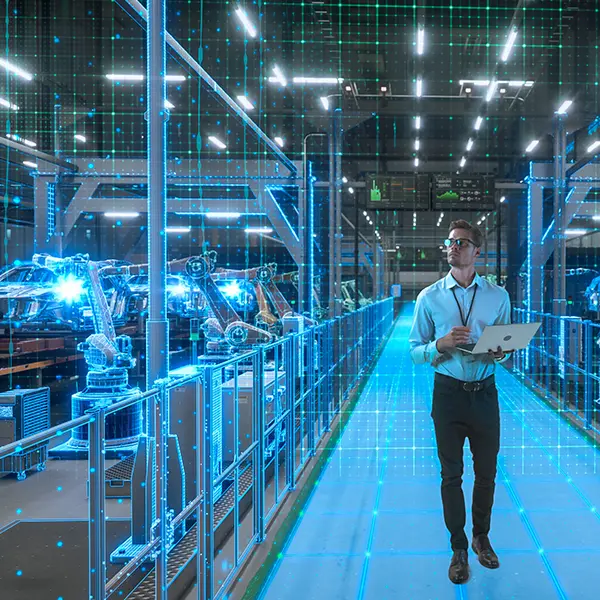
Digital manufacturing delivers a range of advantages by connecting systems, automating processes, and enabling data-driven decision-making across the production lifecycle. These benefits help manufacturers improve efficiency, reduce costs, accelerate product development, and respond more effectively to changing customer and market demands.
Increased Efficiency
Digital manufacturing improves efficiency by automating repetitive tasks, streamlining workflows, and reducing manual intervention across the production process. Integrated systems ensure that data flows seamlessly from design to manufacturing, minimizing delays, miscommunication, and errors.
For example, automated toolpath generation from CAD models or real-time machine feedback from IIoT devices allows teams to optimize operations continuously without stopping production. This results in higher throughput, more consistent quality, and better utilization of both equipment and labor resources.
Faster Time-To-Market
Digital Manufacturing Significantly Shortens Development Cycles:
Rapid Prototyping
CAD/CAM and 3D printing allow quick iteration of designs
Concurrent Engineering
Teams can work in parallel instead of sequentially
Flexible Production
Production lines can be reconfigured quickly for new products
Predictive Maintenance
With Iiot Sensors and Analytics, Manufacturers Can Monitor Equipment Health in Real Time. This Allows:
- Early detection of wear or failure
- Scheduled maintenance instead of reactive repairs
- Reduced downtime

Improved Supply Chain Management
Digital Systems Provide Visibility Across the Supply Chain:
- Track inventory levels in real time
- Adjust procurement based on demand
- Improve coordination between suppliers and production
Greater Customer Satisfaction
Faster Production and Improved Quality Lead To:
- Shorter lead times
- More accurate deliveries
- Increased ability to customize products
Optimized Workforce
AI and Robotics Enable Workers To Focus on Higher-Value Tasks:
- Reduced repetitive labor
- Enhanced safety
- Improved productivity per employee
Cost Savings
Cost Reductions Come From Multiple Areas:
- Reduced material waste
- Lower labor costs
- Fewer defects and rework
- Improved equipment utilization
Business Agility
Digital Manufacturing Allows Companies To:
- Respond quickly to market changes
- Introduce new products faster
- Scale production up or down efficiently
Reduce Costs & Improve Efficiency Across Your Manufacturing Processes
Saratech helps engineering teams streamline workflows, connect systems, and implement digital manufacturing strategies that deliver real results—get started today.
Disadvantages of Digital Manufacturing
While digital manufacturing provides clear operational benefits, it also introduces practical challenges that organizations must carefully manage. From high upfront investment and workforce upskilling to cybersecurity concerns and ongoing technology updates, adoption requires both strategic planning and long-term commitment.
Additionally, increased reliance on connected systems means manufacturers must be prepared for potential disruptions, making risk mitigation and operational resilience key considerations when implementing digital manufacturing solutions.

High Implementation Costs
Initial Investment
Software, hardware, and system integration can represent a significant upfront investment when adopting digital manufacturing technologies.
Business Tip:
Start small by focusing on one or two key areas that will deliver the highest return. Cloud-based solutions with subscription models can help spread out costs over time.
Workforce Skill Requirements
Teams may require training in new software platforms, data analytics, or operating automated systems to effectively support digital manufacturing initiatives.
Business Tip:
Invest in training existing team members or explore local colleges and programs that offer relevant courses. In many cases, one or two internal champions can successfully lead adoption efforts.
Cybersecurity Risks
Connecting systems increases exposure to potential data breaches and cyberattacks, making security a critical consideration.
Business Tip:
Begin with strong passwords, regular software updates, and basic cybersecurity training for your team. Affordable cybersecurity services designed for small businesses can also provide additional protection.

Managing Ongoing Technology Changes
Digital manufacturing technologies evolve rapidly, requiring ongoing updates and system upgrades.
Business Tip:
Focus on technologies that provide clear business value. Prioritize stability and functionality rather than adopting new tools solely because they are the latest available.
Operational Dependence on Digital Systems
Increased dependence on digital systems means that outages or failures can disrupt production operations.
Business Tip:
Develop backup plans, including reliable internet, power redundancy, and manual processes for critical operations to maintain continuity if digital systems become temporarily unavailable.
History and Evolution of Digital Manufacturing
Digital Manufacturing Has Evolved Over Several Decades:
1960s: Introduction of computer-aided design (CAD)
1970s–1980s: Development of computer-aided manufacturing (CAM)
1980s: Adoption of CNC machines
1990s: Emergence of additive manufacturing (3D printing)
Recent Trends in Digital Manufacturing
- Industry 4.0: Integration of AI, IoT, and automation
- Generative AI for Design and Engineering
- Cloud-Based Manufacturing: Remote access to systems and data
- Advanced Robotics & Collaborative Robots
- Augmented Reality (AR) and Virtual Reality (VR) for Training and Maintenance
Key Dimensions of Digital Manufacturing
Product Lifecycle Management (PLM)
PLM systems:
- Track product changes
- Manage revisions and configurations
- Improve collaboration across teams
Smart Factory
A smart factory uses interconnected systems to:
- Automate production
- Monitor performance in real time
- Improve safety and efficiency
Value Chain Management
Digital manufacturing extends beyond the factory floor:
- Optimizes sourcing, production, and distribution
- Reduces costs across the value chain
- Improves customer value
Advanced Technologies in Digital Manufacturing
Artificial Intelligence (AI)
Used for:
- Predictive analytics
- Automated quality inspection
- Process optimization
Robotic Process Automation (RPA)
Improves:
- Efficiency
- Repeatability
- Workplace safety
5G Connectivity
Supports:
- Faster data transfer
- Real-time machine communication
- Low-latency control systems
3D Printing
Enables:
- Rapid prototyping
- Custom part production
- Reduced material waste
Digital Twins
Provide:
- Real-time system simulation
- Predictive maintenance insights
- Process optimization capabilities
The Future of Digital Manufacturing
Expansion of Industry 4.0
Increased adoption of:
- AI-driven automation
- Connected devices
- Data-driven decision-making
Advancements in Cybersecurity
Organizations will invest more in:
- Secure networks
- Data protection
- Threat detection systems
Integration with Digital Twins
Enhanced simulation and optimization will allow:
- More accurate predictions
- Faster decision-making
- Reduced physical testing
Sustainability Focus
Digital manufacturing supports:
- Reduced material waste
- Energy-efficient processes
- Environmentally responsible production
Cloud-Based Manufacturing
Cloud platforms will enable:
- Remote operations
- Scalable infrastructure
- Global collaboration
Conclusion
Digital manufacturing is transforming how products are designed, produced, and delivered. By integrating data, automation, and advanced technologies, it enables organizations to operate more efficiently and respond more quickly to changing demands.
While challenges such as cost, cybersecurity, and workforce readiness remain, the long-term benefits—improved efficiency, reduced costs, and increased agility—make digital manufacturing a critical investment for modern manufacturers.
As the technology continues to evolve, companies that adopt and integrate digital manufacturing strategies will be better positioned to compete in an increasingly complex and fast-paced global market.
Key Takeaways
Digital manufacturing isn't just a buzzword for big corporations; it's a powerful toolkit that can truly transform how small companies design, produce, and deliver their products.
- Digital manufacturing integrates design, production, and data into a unified system
- It enables real-time decision-making and process optimization
- Major benefits include efficiency, speed, cost savings, and flexibility
- Challenges include cost, cybersecurity, and workforce requirements
- Technologies like AI, IoT, and digital twins are driving future growth
