

7 Manufacturing Aids Every Machine Shop Should Consider 3D Printing
Blog Article | September 10, 2026
Summary
This blog helps engineering leaders determine whether their organization needs outside engineering services by assessing recurring challenges in capacity, delivery, technical expertise, quality, process maturity, and leadership bandwidth. It explains how different problem patterns may call for different solutions, including full-time hiring, staff augmentation, or an engineering partner, and positions Saratech as a resource for organizations that need added capacity, specialized expertise, process improvement, software implementation, or project-based engineering support.
Key Topics Covered
Below Are 7 Manufacturing Aids Every Machine Shop Should 3D Print
Every machine shop faces the same challenge: increasing production capacity while controlling costs and meeting tighter delivery schedules. Yet many shops continue using valuable CNC equipment to manufacture jigs, fixtures, gauges, and other production aids—taking machines away from revenue-generating customer work.
Industrial 3D printing provides a faster, more flexible alternative for many manufacturing aids. By producing lightweight, application-specific tooling in hours or days instead of weeks, manufacturers can reduce setup time, improve workflow efficiency, and keep critical machining resources focused on production.
From CNC workholding fixtures to inspection gauges and robotic tooling, additive manufacturing is helping machine shops improve productivity, respond faster to engineering changes, and reduce the cost of custom tooling.
Here are seven manufacturing aids that deliver some of the greatest productivity and cost-saving benefits from additive manufacturing.
1. Jigs
Reduce Setup Time While Improving Machining Consistency
3D printed jigs guide tools or workpieces to ensure consistent positioning during machining operations. Whether used for drilling, tapping, routing, part alignment or prototype manufacturing, they help improve repeatability while reducing operator error. Traditional jigs are often time-consuming to machine, especially when they require custom geometry. With industrial 3D printing, shops can quickly produce lightweight, application-specific jigs and easily revise designs as production requirements change.
Benefits
- Produce custom jigs in days instead of weeks
- Reduce tooling costs for low-volume applications
- Create lightweight tools that improve operator ergonomics
- Quickly modify designs for engineering changes
2. Fixtures & Workholding Tools
Increase Machining Accuracy & Throughput by Reducing Setup Time & Ensuring Repeatable Part Positioning
Reliable workholding tools are essential for maintaining accuracy throughout machining, assembly, and inspection processes. Custom fixtures help secure parts consistently while reducing setup variability. Because many fixtures are unique to a specific component or production run, they are ideal candidates for industrial 3D printing. Instead of machining dedicated fixtures from aluminum or steel, manufacturers can produce durable polymer fixtures much faster and at a lower cost for many applications. These custom fixtures are commonly used for CNC machining, inspection, assembly operations, and prototype or low-volume production, where fast turnaround, repeatability, and flexibility are critical.
Benefits
- Reduce setup time between jobs
- Improve repeatability and part consistency
- Produce custom fixtures for complex geometries
- Quickly replace worn or damaged tooling
3. Gauges & Inspection Fixtures
Improve Quality Control While Reducing Inspection Time & the Cost of Custom Inspection Tooling
Quality depends on consistent inspection. Custom gauges and inspection fixtures help verify dimensions, improve repeatability, and simplify quality control. Because inspection tooling often changes as products evolve, industrial 3D printing enables manufacturers to rapidly produce custom go/no-go gauges, inspection nests, CMM fixtures, and measurement fixtures without the cost or lead time of traditional machining. These tools are commonly used at quality assurance stations to support faster, more consistent inspections, helping manufacturers maintain product quality while minimizing production delays.
Benefits
- Faster access to inspection tooling
- Lower cost for custom gauges
- Improve inspection consistency
- Quickly update tools as designs change
4. Templates
Standardize Repetitive Operations to Improve Consistency, Reduce Errors, & Shorten Production Time
Templates provide repeatable positioning, marking, trimming, or cutting guidance across manufacturing operations, helping standardize repetitive tasks while improving consistency. ecause many templates prioritize customization, speed, and repeatability over extreme strength, they are excellent candidates for additive manufacturing. They can be designed around complex part geometries and easily modified as production requirements evolve. Commonly used for welding, fabrication, layout and marking, and secondary machining operations, 3D printed templates help manufacturers improve accuracy, reduce setup time, and maintain consistent results across repetitive processes.
Benefits
- Rapid production for new jobs
- Easy customization for unique parts
- Lightweight and ergonomic designs
- Lower cost than machined alternatives
5. End-Of-Arm Tooling (Eoat)
Increase Robotic Efficiency With Lightweight, Custom Tooling That Improves Cycle Times & Production Flexibility
End-of-arm tooling enables robotic systems to grip, position, and manipulate components throughout automated production. Because weight matters in robotics, replacing heavier machined components with lightweight 3D printed tooling can reduce robot payload, improve cycle times, and enable application-specific grippers without the cost or lead time of traditional manufacturing. Common applications include pick-and-place systems, vacuum grippers, custom robotic fingers, and material handling solutions, where lightweight, customized tooling helps improve robotic performance, increase production flexibility, and accelerate automation initiatives.
Benefits
- Reduce overall robot payload
- Improve robotic efficiency
- Produce custom grippers quickly
- Simplify design iteration
6. Assembly Aids
Improve Assembly Efficiency by Reducing Operator Errors, Increasing Productivity, & Supporting Standardized Work
Assembly aids help operators consistently position and assemble components while reducing fatigue and minimizing errors. Common applications include assembly nests, alignment guides, tool holders, and operator support fixtures that improve repeatability and workflow efficiency. Because assembly processes frequently evolve, manufacturers benefit from tooling that can evolve with them. 3D printing makes it easy to optimize designs, improve ergonomics, and produce replacement tools on demand. These tools are especially valuable in high-mix manufacturing environments where operators frequently assemble different products or configurations.
Benefits
- Reduce assembly errors
- Improve operator productivity
- Enhance ergonomics
- Support continuous process improvement
7. Forming Tools & Soft Tooling
Shorten Tooling Lead Times & Free CNC Capacity by Replacing Traditionally Machined Tooling With Production-Ready 3D Printed Alternatives
Forming tools support bending, shaping, and secondary manufacturing operations such as sheet metal forming, composite layup, and other production processes. Common applications include sheet metal forming tools, composite layup tooling, prototype tooling, low-volume production tooling, and soft tooling for secondary operations. While high-volume production often requires hardened metal tooling, many prototype and low-volume applications can benefit from production-grade 3D printed tooling. Custom forming tools can take weeks to manufacture using traditional methods. Industrial 3D printing dramatically shortens tooling lead times, allowing manufacturers to validate designs, begin production sooner, and preserve valuable machining capacity. A great example is Saratech's work with Stretch Forming Corporation (SFC), where additive manufacturing dramatically shortens tooling lead times from months to days while freeing CNC equipment for customer production work.
Benefits
- Reduce tooling lead times
- Lower prototype tooling costs
- Validate designs before investing in production tooling
- Free CNC machines for revenue-generating work
Accelerate Your Manufacturing with 3D Printed Tooling Solutions
Whether you need custom jigs, fixtures, gauges, forming tools, or other manufacturing aids, Saratech helps manufacturers reduce tooling lead times, lower costs, and free CNC capacity with production-ready additive manufacturing solutions. From design optimization and material selection to industrial 3D printing and engineering support, our team helps identify where additive manufacturing can improve your production process.
Ready to reduce tooling bottlenecks? Talk with an additive manufacturing expert.
Real-World Success: How SFC Accelerated Tooling Production with 3D Printing
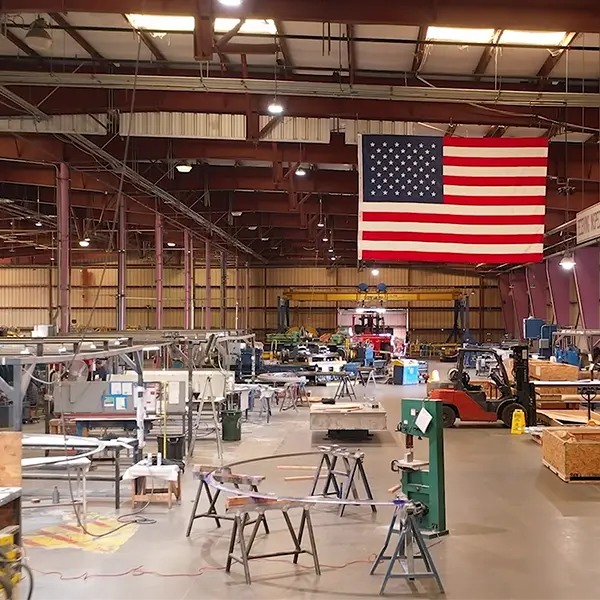
One of the biggest questions manufacturers have when evaluating additive manufacturing is whether 3D printed tooling can withstand real production environments. Stretch Forming Corporation (SFC), an aerospace manufacturer that produces forming tools for the aerospace, defense, space, and industrial sectors, faced a common challenge. Producing aluminum and Medium-Density Fiberboard (MDF) tooling using traditional CNC machining was both time-consuming and expensive. Every tooling project tied up valuable machining capacity that could otherwise be used to manufacture customer parts.
Saratech partnered with SFC to transform legacy drawings into 3D CAD models and produce custom forming tools using industrial 3D printing. The printed tooling was designed for use in SFC's forming machines, enabling the company to produce first-time quality parts for inspection and customer delivery.
The results demonstrated the impact additive manufacturing can have on tooling production:
- The first production-ready forming tool was delivered in just three business days.
- Saratech produced 22 custom forming tools in approximately two months—a project SFC estimated would have required at least six months using its traditional manufacturing process.
- The printed tools delivered the strength and dimensional accuracy required to form metal parts while significantly reducing tooling lead times.
Beyond the initial project, the partnership helped SFC reduce tooling cycle times, shorten production lead times from weeks to days, and free valuable CNC capacity for higher-value production work. The success also led to an ongoing collaboration focused on additive manufacturing, build-to-print services, and part automation.

Why More Machine Shops Are 3D Printing Manufacturing Aids
Manufacturing aids rarely become part of the finished product, but they have an outsized impact on production efficiency. By producing these tools with industrial 3D printing, manufacturers can:
- Reduce tooling lead times from weeks to days
- Free CNC machines for production work
- Lower the cost of custom tooling
- Improve setup consistency
- Accelerate new product introductions
- Quickly replace damaged or worn tooling
- Iterate designs without expensive rework
Common Applications of 3D Printed Manufacturing Aids in Machine Shops
CNC Machining & Secondary Operations
3D printed jigs and fixtures help position parts accurately during CNC machining, drilling, tapping, and finishing operations.
Assembly Line Operations & Workholding
Custom workholding aids improve stability during assembly tasks, reducing setup time and operator error.
Quality Inspection & Measurement
Inspection fixtures and gauges support consistent quality control by providing repeatable measurement setups.
Welding & Fabrication Positioning
Templates and positioning aids help maintain proper alignment during welding and fabrication processes.
Packaging & Material Handling
3D printed trays, guides, and handling tools can streamline packaging and material flow within the shop.
Robotic Automation & Pick & Place
Lightweight EOAT components improve robotic performance and enable custom automation solutions for part handling.
Materials for 3D Printed Manufacturing Aids
The right material for a 3D printed manufacturing aid depends on the application’s strength, temperature, and durability requirements. Standard thermoplastics like PLA and PETG work well for basic templates and low-stress aids, while engineering-grade polymers such as nylon, ABS, and polycarbonate provide greater strength and durability. Carbon fiber-reinforced materials add stiffness for demanding applications, flexible materials like TPU support grips and compliant tooling, and high-performance polymers enable use in more challenging industrial environments.
3D Printed Manufacturing Aids vs. Traditional Manufacturing Methods
|
FACTOR |
3D PRINTING |
TRADITIONAL MANUFACTURING |
|
Lead Time |
Days or Hours |
Days to Weeks |
|
Cost for Low-Volume Tools |
Generally Lower |
Often Higher |
|
Design Flexibility |
High |
Moderate |
|
Customization |
Easy |
More Difficult |
|
Material Strength |
Depends on Material |
Often Higher with Metal |
|
Best Use Case |
Custom, Low-Volume Aids |
High-Volume or High-Load Tooling |
For many manufacturing aids, 3D printing offers a faster and more economical solution. Traditional machining may still be preferable for high-load or high-volume tooling, but additive manufacturing excels when customization, speed, and low-volume production are priorities.
How to Get Started With 3D Printing Manufacturing Aids
Machine shops interested in adopting 3D printed manufacturing aids can start with a simple evaluation process:
-
Identify repetitive processes where custom aids could improve efficiency or accuracy.
- Select suitable applications such as jigs, fixtures, gauges, templates, or assembly aids.
- Choose the right material based on strength, temperature resistance, and wear requirements.
- Design for additive manufacturing to take advantage of lightweight structures and complex geometries.
- Test and refine the aid before scaling its use across production.
- Partner with an experienced provider for design guidance, material selection, and production support.
Conclusion
3D printing is transforming the way machine shops produce manufacturing aids. By enabling faster production, lower costs, improved customization, and on-demand availability, additive manufacturing provides a practical solution for many shop-floor tooling needs. Jigs, fixtures, gauges, templates, end-of-arm tooling, assembly aids, and forming tools are all strong candidates for 3D printing. As machine shops continue to seek greater efficiency and flexibility, 3D printed manufacturing aids offer a valuable way to streamline operations and support continuous improvement. For shops ready to implement custom 3D printed tooling, Saratech can provide the expertise and production capabilities needed to bring manufacturing aid designs from concept to shop floor.
Key Takeaways
- Industrial 3D printing can produce custom manufacturing aids faster and more cost-effectively than traditional machining, especially for low-volume applications.
- Jigs, fixtures, gauges, templates, EOAT, assembly aids, and forming tools are strong candidates for 3D printing.
- 3D printed tooling can reduce setup time, improve repeatability, and lower custom tooling costs.
- Lightweight 3D printed tooling can improve robotic efficiency and operator ergonomics.
- 3D printed forming tools can shorten tooling lead times and free CNC machines for production work.
- Additive manufacturing makes it easier to customize, replace, and modify tooling as designs and production requirements change.
- Traditional machining may still be better for high-volume or high-load tooling, while 3D printing is well suited to applications requiring speed, customization, and flexibility.
- SFC used Saratech's additive manufacturing services to produce 22 custom forming tools in approximately two months, compared with an estimated six months using its traditional process.
